
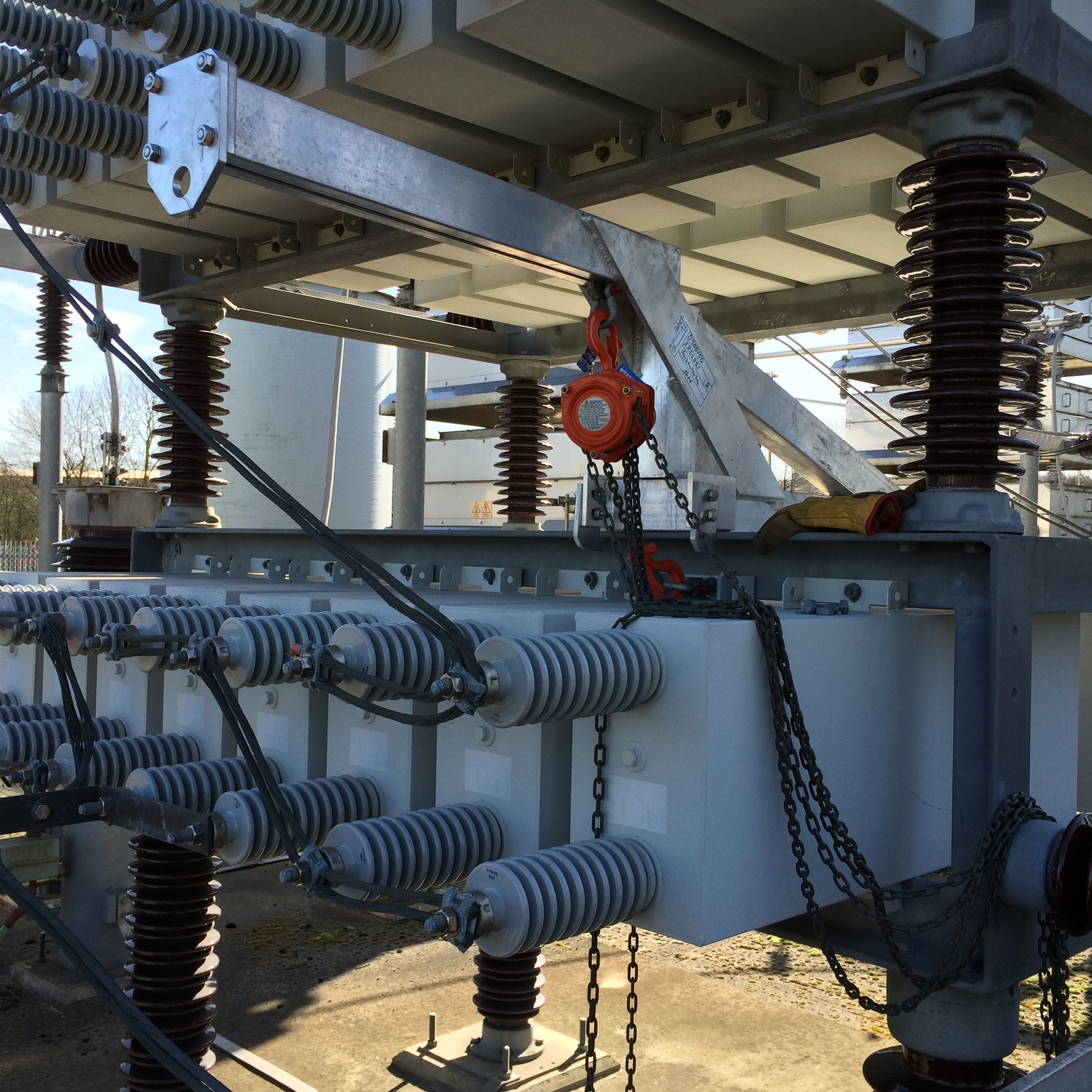
Understanding your needs
Transformer connections need more than just electrical conductivity. In practice, they must also deal with:
- high continuous current
- temperature rise limits
- vibration and short-circuit forces
- misalignment between transformer terminals and connected equipment
- thermal expansion between rigid mounting points
- tight installation space and awkward access during assembly
Tranect can advises on busbar layout, size and performance, and we can also manufacture to customer drawings or develop drawings from dimensions and electrical requirements using our 3D CAD system.
Details of how we supplied RWE Energy with 4000 amp flexible busbars for their 11 kV transformer can be found at this news post: www.tranect.co.uk/4000-amp-11-kv-transformer-connections/
Products for transformer applications
Depending on the duty and the installation, transformer connections may use several different conductor formats.
Copper braid busbars
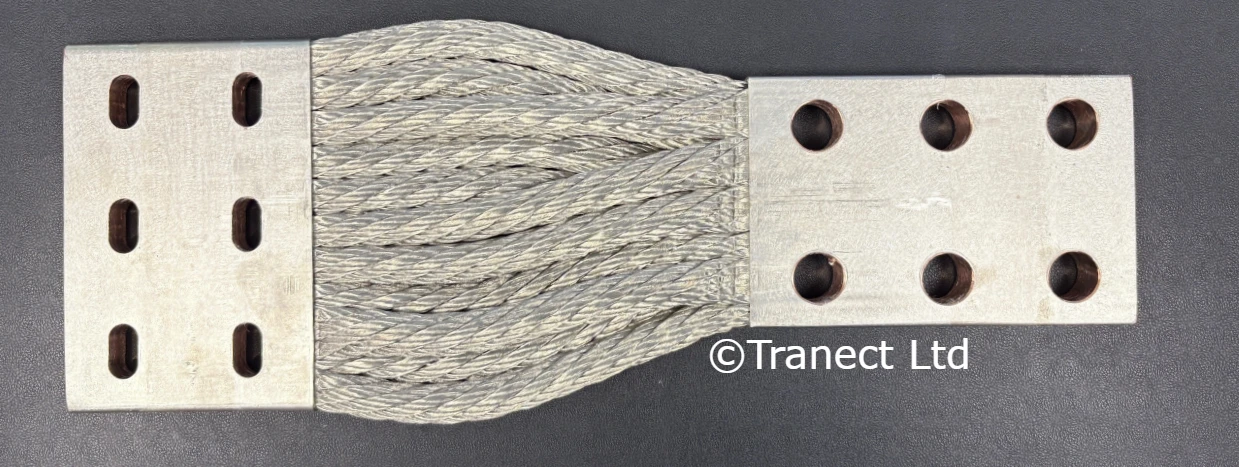
Tranect already supplies high power copper braid busbars for busbar-to-transformer and other power transmission connections. These are useful where flexibility is needed to absorb tolerance stack-up, simplify fitting or reduce mechanical stress on terminals. The existing Braid Busbars and Transformer Braids content explicitly references transformer-to-busduct, transformer-to-busbar and transformer-to-switchgear applications. www.tranect.co.uk/products/braid-busbars/transformer-braids
Solid copper busbars
Where the geometry is stable and a rigid low-resistance link is preferred, Tranect manufactures solid copper busbars from CW004A copper to BS EN 13600, with operations including cutting, punching, profiling, bending, twisting, inserts, assembly and insulation. www.tranect.co.uk/products/copper-busbars
Laminated copper busbars
For more compact installations, Tranect’s laminated copper busbar capability allows complex multi-plane geometries to be created with the same space envelop as a solid copper busbar while allowing flexibility for thermal expansion and site misalignment. www.tranect.co.uk/products/panel-board-busbars/busduct
Why use flexible connections on transformers?
Flexible copper connections are often the sensible choice where:
- transformer pads are not perfectly aligned with connected equipment
- vibration needs isolating from busbar runs or switchgear terminals
- thermal movement must be accommodated without overstressing joints
- installation time on site needs reducing
- access for bolting is limited
Tranect’s flexible braid and flexible busbar products as suitable where alignment and routing are difficult, and where installation practicality matters just as much as nominal current rating.
Materials and finishing options
Tranect busbars are manufactured from high grade CW004A copper (Cu-ETP) to BS EN 13600. Surface finishes depend on the application and interface requirements.
Typical options include:
- plain copper
- electro-tin plated copper
- silver plated copper
- nickel plated copper
Turnkey packages can include:
- a kit of solid and flexible busbars
- Insulators
- Support frames
- fastener kits and site-ready assemblies

Design support for awkward transformer connections
A neat drawing is one thing. A real switchroom is usually less cooperative.
Tranect’s busduct case study shows the sort of practical problem-solving that is relevant to transformer installations: the busduct was not aligned with the MCCB, so spreader bars and flexible conductors were designed to accommodate front-to-back and height misalignment, with 3D CAD used to visualise the solution and reduce site installation time. The same design logic applies directly to transformer terminations where mating equipment is rarely sitting exactly where the brochure suggested it would.
If you have existing parts, site dimensions, sketches or legacy drawings, Tranect can work from customer data, create drawings from dimensions and requirements, or reverse engineer replacement busbars where originals are no longer available.
How Tranect supports transformer projects
Tranect can provide a 3D CAD model that suits transformer OEMs, panel builders and site contractors:
- design support
- prototypes and samples
- sub-assembly
- kitting
- OEM supply chain support
- reverse engineering
That is useful because transformer projects often start with “we need a connection” and only later become a stable design and drawing pack.

Our goal is to offer broad capabilities, competitive pricing, exceptional quality and outstanding service to each and every customer.
Our Services
About
Contact us
©2024 Tranect Ltd. All rights reserved.